
What Do Sun Conures Eat in the Wild?: Nature's Diet Revealed
Sun Conures eat fruits, seeds, nuts, berries, and insects in the wild. They forage in trees and shrubs.
Sun Conures are vibrant and social parrots native to northeastern South America. Their diet in the wild is diverse, consisting of various fruits, seeds, nuts, berries, and occasional insects. These natural food sources provide them with essential nutrients. Foraging in trees and shrubs keeps them mentally stimulated and physically active.
Understanding their wild diet helps pet owners replicate a balanced diet in captivity. Offering a variety of foods can ensure their health and happiness. Sun Conures thrive on a diet that mimics their natural eating habits, making them more vibrant and energetic in both the wild and captivity.
Credit: www.alamy.com
Introduction To Sun Conures
Sun Conures are vibrant and lively parrots. They are native to northeastern South America. Their bright colors and playful nature make them popular pets. Understanding their wild diet helps in providing proper care.
Natural Habitat
Sun Conures live in tropical forests. They are found in Brazil, Guyana, and Venezuela. They prefer dense forests and wooded savannas. These areas provide ample food and shelter.
Physical Characteristics
Sun Conures are known for their bright plumage. They have a mix of orange, yellow, and green feathers. Their average length is 12 inches. They weigh around 100 grams. Their strong beaks help them crack open nuts and seeds.
Primary Diet Components
The diet of wild Sun Conures is diverse and nutritious. Their food sources are rich in essential nutrients. These colorful birds thrive on a mix of fruits, berries, seeds, and nuts. Each food type contributes to their health and vibrant plumage.
Fruits And Berries
Fruits and berries are a significant part of a Sun Conure's diet. They provide vitamins and hydration. These birds enjoy a variety of fruits, including:
- Mangoes
- Bananas
- Apples
- Oranges
Berries offer antioxidants and fiber. Common berries include:
- Blueberries
- Raspberries
- Blackberries
Seeds And Nuts
Seeds and nuts are essential for Sun Conures. They provide protein and fats. Common seeds in their diet include:
- Sunflower seeds
- Pumpkin seeds
- Safflower seeds
Nuts add to their dietary needs. These include:
- Almonds
- Walnuts
- Pecans
Sun Conures crack nuts with their strong beaks. This helps in maintaining beak health.
Seasonal Variations In Diet
Sun Conures have a varied diet in the wild. Their food sources change with the seasons. These changes ensure they get the nutrients they need year-round.
Dry Season Feeding
During the dry season, food is less abundant. Sun Conures rely more on seeds and nuts. These are high in fat, providing essential energy. They also eat fruits, but these are scarcer.
- Seeds: Sunflower seeds, millet, and other small seeds.
- Nuts: Nuts like almonds and walnuts.
- Fruits: Few available fruits like berries and figs.
Wet Season Feeding
In the wet season, food sources are plentiful. Sun Conures enjoy a diverse diet. Fresh fruits and vegetables are abundant. They also consume flowers and nectar.
- Fruits: Mangoes, papayas, and bananas.
- Vegetables: Fresh greens and other leafy plants.
- Flowers: They consume flowers for nectar.
Their diet in the wet season is richer in vitamins. This helps them stay healthy and vibrant.

Credit: www.poodlesandparrots.com
Foraging Behavior
Understanding the foraging behavior of sun conures in the wild provides insight into their diet. These colorful birds are known for their active and resourceful nature, tirelessly searching for food to sustain themselves.
Daily Foraging Patterns
Sun conures start their day early. At dawn, they leave their nests to search for food. They spend most of their day foraging. They travel in flocks to find food sources. Late afternoon, they return to their roosting spots. Their daily routine ensures they get enough food.
Feeding Techniques
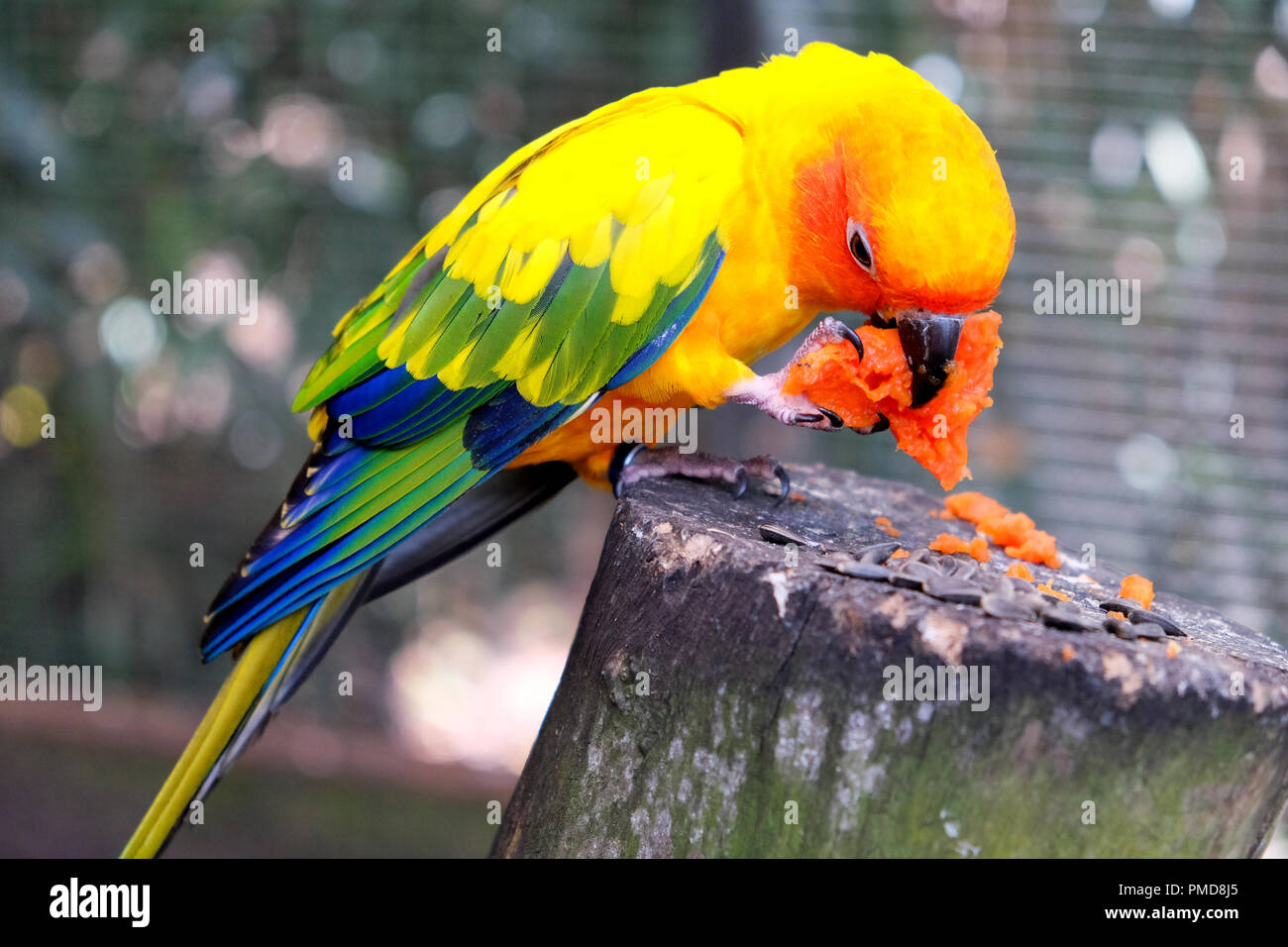
Sun conures use their beaks to crack open seeds. They prefer seeds from various tropical plants. They also eat fruits, using their beaks to peel and eat the flesh. Berries and nuts are a part of their diet too.
Sun conures are known to hang upside down. This helps them reach fruits and seeds. Their strong feet and beaks aid in this feeding technique.
Nutritional Needs
Sun Conures are vibrant parrots with specific dietary needs in the wild. Their diet ensures they stay healthy and energetic. Understanding their nutritional needs helps in providing a balanced diet.
Essential Vitamins
Sun Conures need essential vitamins for strong health. They get these vitamins from various fruits and vegetables. Key vitamins include:
- Vitamin A: Crucial for vision and immune system.
- Vitamin C: Supports the immune system and helps in healing.
- Vitamin E: Important for skin and feather health.
In the wild, they consume a variety of foods rich in these vitamins.
Protein Sources
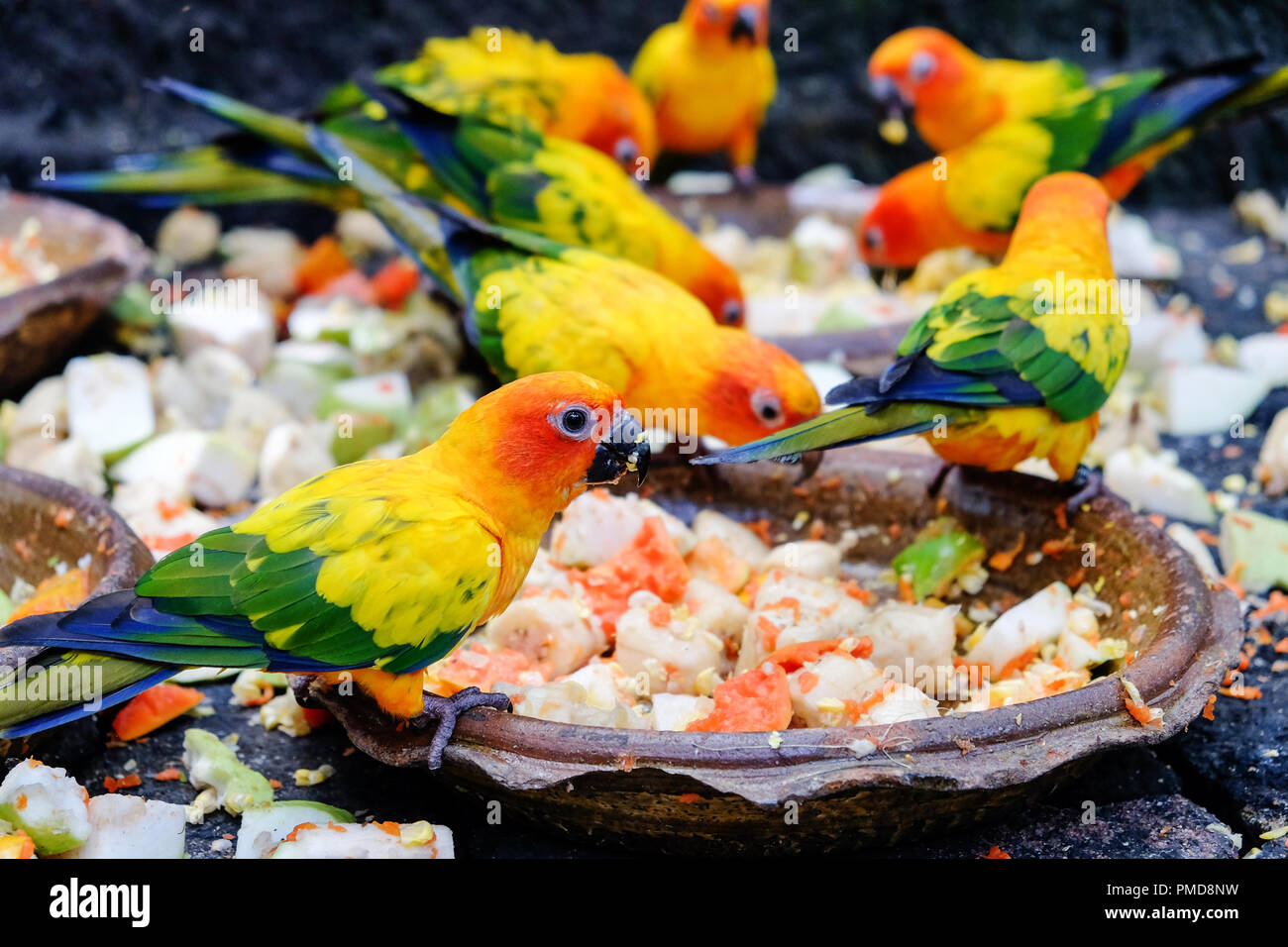
Proteins are vital for muscle development and overall health. Sun Conures find protein in different sources:
| Protein Source | Details |
|---|---|
| Insects | Rich in protein, found in the wild. |
| Seeds | Provide proteins and other nutrients. |
| Nuts | High in protein and healthy fats. |
These protein sources ensure they remain strong and healthy.
Credit: www.alamy.com
Impact Of Habitat On Diet
The diet of Sun Conures varies greatly depending on their habitat. These colorful birds live in different environments, each offering distinct food sources. Understanding the impact of habitat on their diet helps us better care for them in captivity.
Forest Habitats
In forest habitats, Sun Conures have a rich variety of food sources. They eat fruits, seeds, and nuts found in the trees. They love the sweet taste of berries and tropical fruits.
Sun Conures also enjoy flowers and nectar. The forest provides plenty of this. These birds use their strong beaks to crack open hard nuts and seeds.
| Food Type | Examples |
|---|---|
| Fruits | Mangoes, Bananas, Berries |
| Seeds | Sunflower, Pumpkin, Pine Seeds |
| Flowers | Hibiscus, Sunflower, Dandelion |
Savanna And Grasslands
In savanna and grassland habitats, the diet of Sun Conures changes. These areas have fewer trees but plenty of grasses and shrubs. Sun Conures find seeds and grains here. They also eat insects and small plants.
The birds forage on the ground for food. They find many tasty treats in the tall grass. This diet keeps them healthy and strong.
- Grass seeds
- Grains
- Insects
- Small plants
Sun Conures adapt well to different habitats. Their diet reflects the availability of food in their environment.
Threats To Natural Diet
Sun Conures are vibrant parrots found in South America. Their natural diet is crucial for their health. Sadly, their natural diet faces several threats. These threats impact their survival in the wild.
Deforestation
Deforestation is a major threat to Sun Conures. Forests are their natural home. Trees provide food like fruits, seeds, and nuts. Cutting down trees destroys their food sources.
Without trees, Sun Conures struggle to find food. They may also lose their nesting sites. This affects their ability to reproduce. As forests disappear, so does their diet.
Climate Change
Climate change also affects Sun Conures' diet. Changes in weather patterns impact food availability. Some plants may not grow well in altered climates.
Extreme weather events can destroy food sources. Droughts and floods can wipe out plants Sun Conures rely on. This leads to food scarcity for these birds.
| Threat | Impact on Diet |
|---|---|
| Deforestation | Loss of food sources like fruits and seeds |
| Climate Change | Unpredictable food availability due to weather changes |
Both deforestation and climate change are significant threats. Protecting their natural habitat is essential for their survival.
Conservation Efforts
Sun Conures are bright, colorful birds found in the wild. Their numbers are decreasing due to habitat loss and pet trade. Conservation efforts aim to protect these beautiful birds. Let's explore how these efforts help Sun Conures.
Habitat Protection
Protecting the habitats of Sun Conures is vital. These birds live in forests and savannas. Deforestation destroys their homes. Conservationists work to preserve these areas.
Efforts include creating protected zones and reforestation projects. These actions provide safe spaces for Sun Conures to live and breed. Protected zones also help other wildlife thrive.
| Action | Impact |
|---|---|
| Protected Zones | Safe habitat for birds |
| Reforestation | More trees and food sources |
Community Involvement
Local communities play a key role in conservation. Educating people about Sun Conures helps. Teaching about the importance of these birds can lead to better protection.
Community programs encourage sustainable practices. These practices reduce habitat destruction and illegal pet trade. Local people can become guardians of Sun Conures.
- Education programs
- Sustainable farming
- Anti-poaching patrols
Frequently Asked Questions
What Is Sun Conures Favorite Food?
Sun conures love fresh fruits like apples, mangoes, and berries. They also enjoy vegetables, nuts, and seeds.
What Do Wild Conures Eat?
Wild conures eat fruits, seeds, nuts, berries, and blossoms. They also consume insects and small invertebrates for protein.
What Can Conure Not Eat?
Conures should not eat chocolate, avocado, caffeine, alcohol, onions, garlic, salty foods, or sugary treats. These can be toxic.
What Fruits And Vegetables Can Sun Conures Eat?
Sun conures can eat apples, bananas, grapes, oranges, carrots, spinach, broccoli, and sweet potatoes. Ensure fruits and vegetables are fresh and clean. Avoid avocado, rhubarb, and pits from fruits.
Conclusion
Sun Conures thrive on a diverse diet in the wild. They eat fruits, seeds, nuts, and flowers. Understanding their natural diet helps in providing better nutrition for pet Sun Conures. A balanced diet ensures they stay healthy and vibrant. Feeding them a variety of foods is key to their well-being.

Viola R. Daigle
I'm Viola R. Daigle, a dedicated Internet Marketer. I work with WarriorPlus as a Vendor and Affiliate, and I’m also an Affiliate on JVZoo and Legendary Marketer. My passion is to provide honest and detailed reviews of Internet Marketing (IM) products and software. I love helping people choose the right tools and strategies to grow their online business with confidence.


