
How to Care for a Sun Conure: Essential Tips and Tricks

To care for a Sun Conure, provide a balanced diet and plenty of social interaction. Ensure they have a spacious cage and regular exercise.
Sun Conures are vibrant, social birds that thrive on interaction and attention. They need a balanced diet of fruits, vegetables, pellets, and occasional seeds. A spacious cage with toys and perches is crucial for their physical and mental well-being. Regular out-of-cage exercise helps keep them healthy.
Social engagement is vital; spend time daily to bond and prevent loneliness. Regular veterinary check-ups ensure they remain in good health. Proper care and attention keep your Sun Conure happy and thriving, making them a delightful companion.
Introduction To Sun Conures
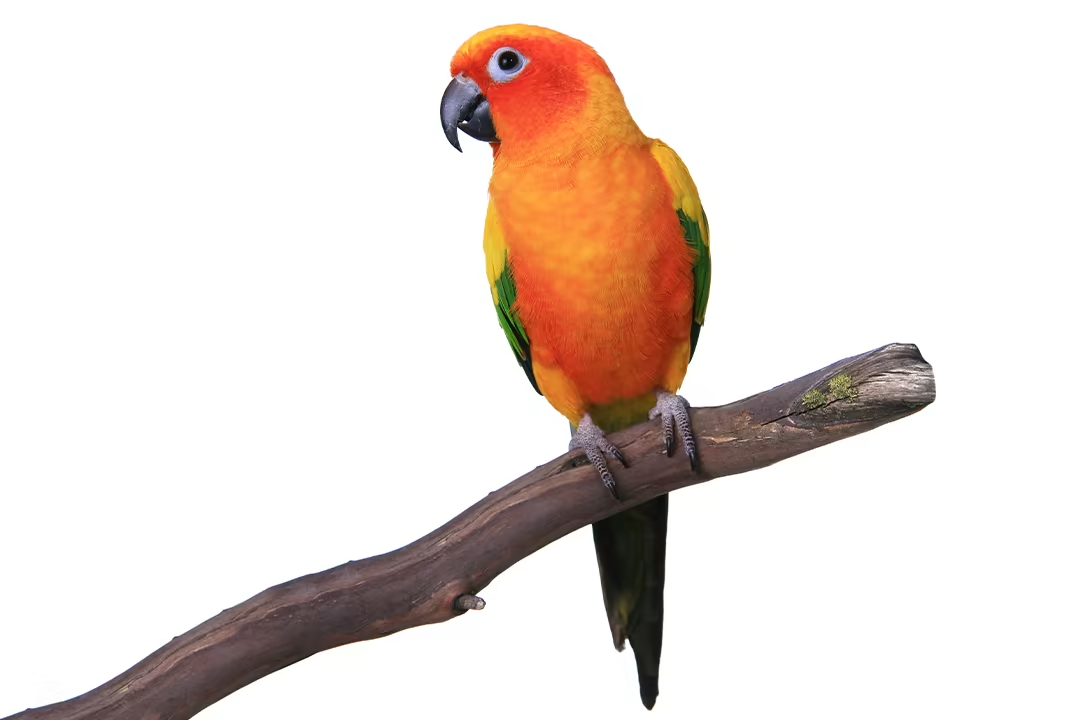
Sun Conures are vibrant, social, and affectionate birds. They make great pets. Known for their bright colors and playful nature, they can light up any home.
Origin And Habitat
Sun Conures originate from South America. They are native to countries like Brazil, Guyana, and Venezuela. These birds thrive in tropical and subtropical regions. They are commonly found in forests, woodlands, and savannahs.
Physical Characteristics
Sun Conures are small to medium-sized parrots. They usually measure around 12 inches in length. Their wingspan can reach up to 6 inches.
| Feature | Description |
|---|---|
| Color | Bright yellow bodies with orange faces and bellies. |
| Beak | Short and strong, ideal for cracking nuts. |
| Feet | Two toes pointing forward, two pointing backward. |
Their eyes are dark brown, giving them a curious look. Feathers are soft yet vibrant. They shed feathers regularly, so expect some mess.
- Bright and colorful plumage.
- Strong, curved beaks.
- Dark brown eyes.
These birds are known for their loud, high-pitched calls. They use their beaks for climbing and exploring. Their playful nature makes them delightful companions.
Choosing The Right Cage
Choosing the right cage for your Sun Conure is crucial. The cage will be your bird's home. It must provide comfort, safety, and ample space. A well-chosen cage ensures your feathered friend stays healthy and happy.
Size And Material
Size is the most important factor. A Sun Conure needs plenty of room to move. The cage should be at least 24 inches wide, 24 inches deep, and 30 inches high. This allows enough space for stretching wings and playing with toys.
Material also matters. Choose a cage made of sturdy, non-toxic materials. Stainless steel is the best option. It lasts long and is easy to clean. Avoid cages with zinc or lead coatings. These can be harmful to your bird.
Ideal Placement
Placement of the cage affects your bird's well-being. Place the cage in a busy area of your home. This way, your Sun Conure feels part of the family. Avoid placing the cage in the kitchen. Fumes from cooking can be dangerous.
Keep the cage away from windows and direct sunlight. Too much heat can harm your bird. Ensure the cage is at eye level. This helps your bird feel secure and comfortable.
| Factor | Recommendation |
|---|---|
| Size | At least 24"x24"x30" |
| Material | Stainless Steel |
| Placement | Busy area, away from kitchen and direct sunlight |
Remember, a well-chosen cage ensures your Sun Conure’s happiness. Pay attention to size, material, and placement for the best living conditions.
Feeding Your Sun Conure
Feeding your Sun Conure properly ensures they live a healthy, happy life. A balanced diet is key to their well-being. This section will guide you on their dietary needs and safe foods.
Dietary Needs
Sun Conures need a mix of seeds, pellets, fruits, and vegetables. A variety ensures they get all the nutrients they need.
- Seeds and Pellets: These should make up about 60% of their diet. Use high-quality, fortified pellets.
- Fruits: Offer fresh fruits like apples, bananas, and berries. Avoid seeds and pits.
- Vegetables: Include leafy greens, carrots, and bell peppers. Raw or lightly steamed is best.
Provide fresh water daily. Clean the water dish to avoid bacteria.
Safe And Unsafe Foods
Not all foods are safe for Sun Conures. It's important to know which ones are harmful.
| Safe Foods | Unsafe Foods |
|---|---|
| Apples (without seeds) | Avocado |
| Bananas | Chocolate |
| Carrots | Caffeine |
| Spinach | Onions |
| Blueberries | Garlic |
Always wash fruits and vegetables before feeding. Avoid processed foods and treats high in sugar.
Understanding your Sun Conure's dietary needs keeps them healthy. Provide a balanced diet and monitor their health regularly.
Creating A Comfortable Environment
Sun Conures are vibrant and social birds. They need a comfortable environment to thrive. This means paying attention to temperature, lighting, and providing toys for enrichment. Creating the right environment will keep your Sun Conure happy and healthy.
Temperature And Lighting
Sun Conures prefer warm temperatures. The ideal range is between 70°F to 80°F. Use a bird-safe heater if your home gets too cold. Avoid placing the cage near drafty windows or air conditioners.
Proper lighting is essential for your bird's health. Use full-spectrum lights that mimic natural sunlight. This helps regulate their sleep cycle and supports vitamin D production. Ensure the cage receives about 10-12 hours of light daily.
Toys And Enrichment
Sun Conures are intelligent and active. They need various toys to stay entertained. Rotate toys regularly to keep them engaged. Choose toys made of bird-safe materials like wood and rope.
Here are some toy ideas:
- Foraging toys - Hide treats inside to encourage natural behaviors.
- Chew toys - These help keep their beaks healthy.
- Swings and ladders - Provide exercise and fun.
Interactive play is also important. Spend time each day interacting with your Sun Conure. This strengthens your bond and keeps your bird mentally stimulated.
| Toy Type | Benefit |
|---|---|
| Foraging Toys | Encourage natural behaviors |
| Chew Toys | Maintain beak health |
| Swings and Ladders | Provide exercise |
Ensure all toys are the right size. Small parts can be dangerous. Inspect toys regularly for wear and tear. Replace them as needed to keep your bird safe.
Health And Wellness
Keeping your Sun Conure healthy is crucial for its happiness. Understanding their health and wellness needs can help them live longer. Let's dive into common health issues and the importance of regular check-ups.
Common Health Issues
Sun Conures can face several health problems. Knowing these issues helps in early detection.
- Feather Plucking: Stress or boredom can cause feather plucking.
- Respiratory Infections: Symptoms include sneezing and wheezing.
- Psittacosis: This is a bacterial infection affecting birds.
- Fatty Liver Disease: Often caused by an unhealthy diet.
- Beak Overgrowth: Poor diet or lack of chewing toys can cause this.
Regular Check-ups
Regular vet visits are important for your Sun Conure's health.
- Visit an avian vet at least once a year.
- Regular check-ups can catch issues early.
- Discuss diet and exercise with your vet.
- Monitor weight and behavior changes.
- Keep vaccination records up-to-date.
Ensure your Sun Conure has a balanced diet. Fresh fruits, vegetables, and seeds are essential. Clean their cage regularly to prevent infections.
Credit: www.petco.com
Training And Socialization
Training and socialization are vital for a happy and healthy Sun Conure. These smart birds need mental and physical stimulation. Proper training and bonding build trust and strengthen your relationship. Let’s explore how to do this effectively.
Basic Commands
Teaching your Sun Conure basic commands is essential. Start with simple words like "step up" and "step down". Use a gentle tone and consistent hand gestures.
- Step Up: Encourage your bird to step onto your finger.
- Step Down: Train your bird to step off safely.
Consistency is key. Practice these commands daily. Reward your bird with treats and praise.
Bonding Activities
Bonding with your Sun Conure involves engaging activities. These activities help build trust and affection.
| Activity | Description |
|---|---|
| Playtime | Use toys to entertain and stimulate your bird. |
| Cuddle Time | Allow your bird to sit on your shoulder. |
| Training Sessions | Short, fun sessions to teach new tricks. |
Incorporate a variety of activities to keep your bird engaged. Regular interaction strengthens your bond.
Grooming Essentials
Keeping your Sun Conure clean and well-groomed is essential. Proper grooming ensures your bird stays healthy and happy. This section covers the basics of bathing, cleaning, nail care, and beak care.
Bathing And Cleaning
Sun Conures love water. They enjoy regular baths to keep their feathers clean. You can provide a shallow dish of water for bathing. Ensure the water is lukewarm. Avoid using soap as it can harm their feathers.
- Provide a shallow dish of lukewarm water.
- Avoid using soap or chemicals.
- Let your bird bathe naturally.
Spray misting is another option. Use a spray bottle with clean water. Mist your bird gently to mimic rain. This keeps their feathers in top condition.
Nail And Beak Care
Your Sun Conure's nails grow continuously. Overgrown nails can cause discomfort. Regular trimming is necessary. Use bird-specific nail clippers. Be cautious not to cut too deep. The quick, a blood vessel, runs through the nail.
- Use bird-specific nail clippers.
- Trim nails regularly to avoid overgrowth.
- Avoid cutting into the quick.
Beak care is also important. Provide natural perches like wood. This helps to maintain the beak's shape and size. Offer chew toys to keep the beak trimmed.
| Grooming Task | Tools Needed |
|---|---|
| Nail Trimming | Bird nail clippers |
| Beak Maintenance | Natural perches, chew toys |
Handling And Interaction
Sun Conures are vibrant and social parrots. They crave interaction and handling. Knowing how to properly handle them ensures a happy and healthy bird.
Proper Handling Techniques
Proper handling of a Sun Conure is crucial. First, wash your hands thoroughly. Birds are sensitive to chemicals and dirt. Always approach your bird calmly. Sudden movements can scare them.
- Use a soft and gentle touch.
- Support their body with your hand.
- Never squeeze or hold too tightly.
Respect their space. Let them come to you. This builds trust and comfort.
| Do's | Don'ts |
|---|---|
| Approach calmly | Make sudden movements |
| Use gentle touch | Squeeze tightly |
| Support their body | Grab their wings |
Signs Of Stress
It's essential to recognize signs of stress in your Sun Conure. Stress can harm their health.
- Feathers fluffed up
- Loss of appetite
- Excessive screaming
- Feather plucking
If you notice these signs, give them space. Reduce handling and loud noises. Ensure their environment is calm and safe.
Building a strong bond requires patience. Always be gentle and kind. Your Sun Conure will respond with love and trust.
Traveling With Your Sun Conure
Traveling with your Sun Conure can be a rewarding experience. These vibrant birds love new sights and sounds. Proper preparation ensures a safe and comfortable trip for your feathered friend. Below are essential tips to make traveling with your Sun Conure enjoyable.
Preparation And Supplies
Before you travel, gather all necessary supplies for your Sun Conure. A well-prepared trip keeps your bird happy and healthy.
- Travel Cage: Choose a sturdy, secure travel cage. Ensure it has enough space for your bird to move comfortably.
- Food and Water: Pack enough food and water for the entire trip. Bring a spill-proof water bottle and food container.
- Comfort Items: Include your bird’s favorite toys and perches. These items provide comfort and reduce stress during travel.
- First Aid Kit: Have a basic first aid kit for your bird. Include items like bandages, antiseptic wipes, and tweezers.
Safety Tips
Safety is crucial when traveling with your Sun Conure. Follow these tips to ensure a safe journey.
- Secure the Cage: Ensure the travel cage is securely fastened in your vehicle. This prevents it from moving during transit.
- Maintain Temperature: Keep the environment comfortable. Avoid extreme temperatures and direct sunlight.
- Frequent Breaks: Take regular breaks during long trips. Allow your bird to stretch and relax.
- Ventilation: Ensure proper ventilation in the car. Fresh air prevents overheating and stress.
Traveling with your Sun Conure can be fun and stress-free. Proper preparation and safety measures ensure a smooth journey for both you and your bird.

Credit: www.youtube.com
Conclusion And Final Tips
Caring for a Sun Conure is a rewarding experience. These colorful birds bring joy and excitement to any home. To ensure their happiness and health, follow these final tips.
Recap Of Key Points
- Proper Diet: Feed your Sun Conure a balanced diet. Include fresh fruits, vegetables, and quality pellets.
- Clean Environment: Keep the cage clean. Change the water daily.
- Social Interaction: Spend time with your bird every day. They love attention.
- Mental Stimulation: Provide toys and activities. This keeps their minds active.
- Regular Check-Ups: Visit the vet regularly. This ensures they stay healthy.
Additional Resources
For more information, check these resources:
| Resource | Description |
|---|---|
| Bird Care Books | Books offer in-depth knowledge on bird care. |
| Online Forums | Join forums to connect with other bird owners. |
| Veterinarian Advice | Consult your vet for expert tips and advice. |
| Bird Clubs | Local bird clubs provide support and resources. |
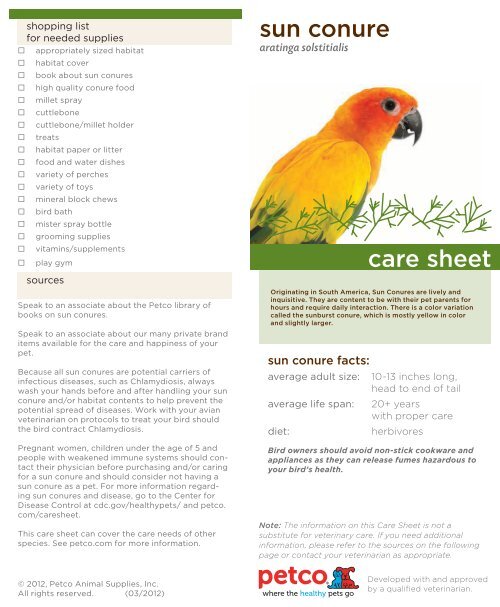
Following these tips ensures your Sun Conure stays happy and healthy. Enjoy your time with your feathered friend!
Credit: www.yumpu.com
Frequently Asked Questions
Are Sun Conures Easy To Take Care Of?
Sun conures are moderately easy to care for. They need daily interaction, a balanced diet, and a clean environment. Regular vet check-ups are essential.
What Are The Disadvantages Of Sun Conure?
Sun conures can be very noisy and require a lot of attention. They are prone to feather plucking and can be expensive to care for. Their strong beaks may cause damage to furniture.
How Do You Bond With A Sun Conure?
Spend quality time daily, offer treats, and gently handle your sun conure. Use toys and interactive games to build trust.
How To Care For Conures For Beginners?
Provide a spacious cage and plenty of toys. Feed a balanced diet of pellets, fruits, and vegetables. Ensure regular social interaction and mental stimulation. Maintain proper hygiene and regular vet check-ups. Offer fresh water daily.
Conclusion
Caring for a Sun Conure requires attention, love, and knowledge. Ensure a balanced diet and a stimulating environment. Regular vet check-ups keep your bird healthy. Build a strong bond with daily interaction. With proper care, your Sun Conure will thrive and bring joy to your life for many years.

Viola R. Daigle
I'm Viola R. Daigle, a dedicated Internet Marketer. I work with WarriorPlus as a Vendor and Affiliate, and I’m also an Affiliate on JVZoo and Legendary Marketer. My passion is to provide honest and detailed reviews of Internet Marketing (IM) products and software. I love helping people choose the right tools and strategies to grow their online business with confidence.


